Embarking on a Technological Odyssey
Welcome to my personal projects portfolio, where technological ingenuity meets hands-on problem-solving. With a solid academic foundation in computer science and practical experience in software development, I've navigated the vibrant landscape where theory seamlessly transitions into practice.
My journey is defined by collaboration, adaptability, and delivering impactful solutions within agile teams. Each project serves as a testament to my ability to apply academic insights to real-world challenges, transforming them into tangible outcomes.
At the heart of my endeavors is a profound passion for innovation in artificial intelligence and machine learning. Whether it's exploring the intricacies of computer vision, mastering natural language processing, or developing predictive models, I am dedicated to harnessing the power of AI/ML for practical applications.
My enthusiasm for technology extends beyond theoretical knowledge, finding expression in each project I undertake. From creating scalable web applications to developing sophisticated machine learning models, I approach every challenge with zeal and a commitment to excellence.
I invite you to explore my portfolio and witness the practical dimensions of my experience. This collection of diverse projects highlights the real-world impact of my skills and showcases my dedication to pushing the boundaries of technology. Whether you're interested in collaboration, have an exciting project idea, or simply want to connect with a passionate technologist, I'm here to explore the limitless possibilities with you.
Personal and Collaborative Projects
Prediction of parking areas availability from parking dataset using AI/ML models
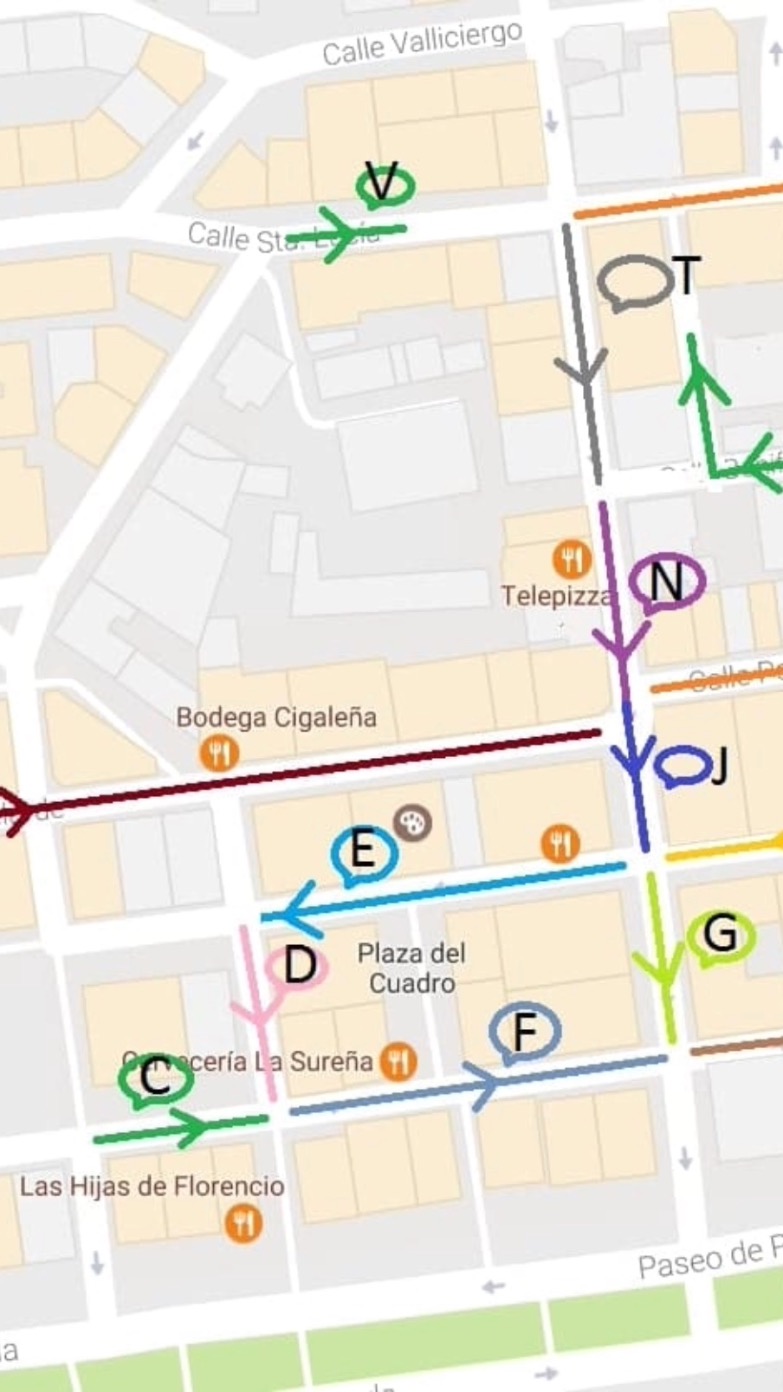
Implemented an AI/ML-driven solution to predict parking availability using a dataset from 400 on-street parking sensors in Santader, Spain. Employed LSTM and Random Forest models, conducting a comparative analysis of performance metrics and hyperparameters for optimal model selection. The comprehensive data preparation involved Exploratory Data Analysis (EDA), data visualization, cleaning, and pre-processing, including noise identification, handling outliers, and imputation. Employed techniques such as dimensionality reduction, feature selection, and engineering to enhance model accuracy. The project aims to assist drivers in Santader by forecasting parking availability for the upcoming hour, enhancing urban mobility through data-driven insights.
Prediction of parking areas availability from parking dataset using AI/ML models
Integrated Technologies and Methods: Python, Streamlit, LSTM, Random Forest, Exploratory Data Analysis, Data Cleaning and Pre-processing, Data Imputation, Feature Selection and Engineering.
Robot Movememnt Automation with Computer Vision
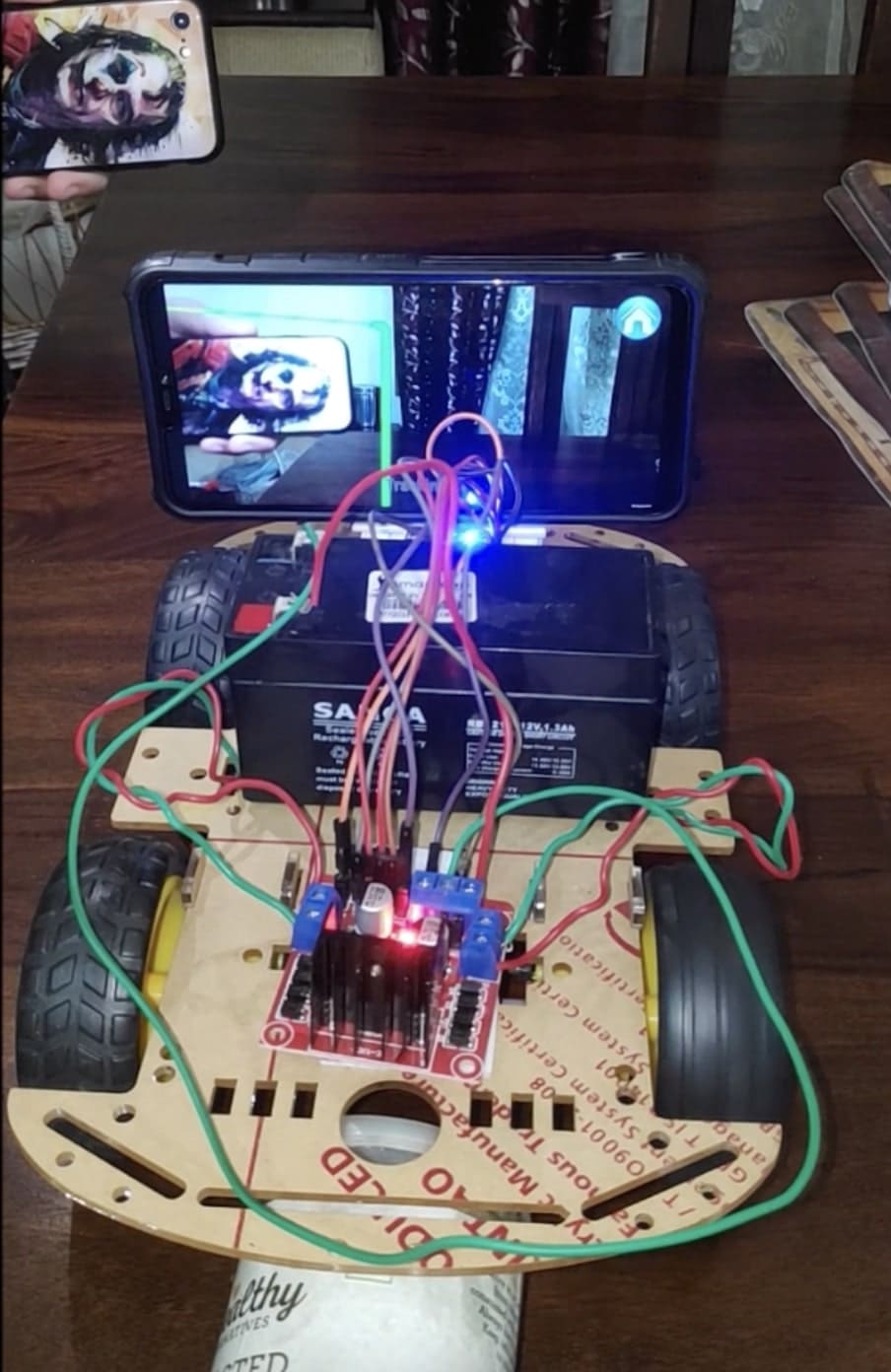
Designed a Robot Movement Automation System utilising Computer Vision and Digital Image Processing, with a focus on the SIFT algorithm through OpenCV. This project seamlessly integrates Unity 3D with Vuforia SDK for AR-like feature detection and Arduino IDE for motor control. The system allows a robot to proficiently track and follow user-selected objects within a Wi-Fi network range, showcasing adaptability to changes in orientation and scale. Hardware components include a robot chassis, L298N Motor Driver, ESP8266 Node MCU, DC Motors, and a 12V rechargeable battery.
Robot Movememnt Automation with Computer Vision
Integrated Technologies and Methods: Ardruino, Unity 3D, C#, Vuforia and SIFT Algorithm

Blood Barrier Kaggle Challenge
Secured 1st rank in the Kaggle challenge as part of the 'Machine Learning for Intelligent Systems' module at Aberystwyth University. Led the competition by developing robust machine learning models, specifically employing Support Vector Machines (SVM) with strategic parameter tuning achieving an accuracy of 90.603%. Focused on predicting Blood-Brain Barrier (BBB) penetration for chemical compounds, the project showcased expertise in feature extraction, model training, and precision measurement using the AUC metric. The Python code exemplified proficiency in data manipulation and submission file generation. This accomplishment reflects a mastery of machine learning principles within the academic setting, contributing to a comprehensive understanding of intelligent systems.
Blood Barrier Kaggle Challenge
Integrated Technologies and Methods: SVM, Python, AUC Metric, Feature Extraction.
Compound Classification using Chemical Structural Information (PhysioNet Computing in Cardiology Challenge 2017)
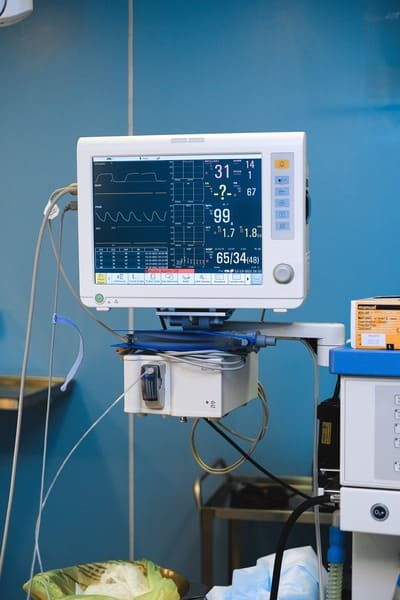
Achieved 5th place in a Kaggle challenge with an accuracy of 82.947%, this project centered on the classification of cardiac arrhythmia using short single-lead ECG recordings from the PhysioNet Computing in Cardiology Challenge 2017 dataset . The primary objective involved categorizing ECG segments into normal rhythm, atrial fibrillation (AF), other rhythms, or noisy recordings. Conducting thorough data exploration, which included the use of matplotlib, laid the groundwork for a robust feature-based approach leveraging random forest and an end-to-end strategy incorporating a CNN architecture. The dataset encompassed extracted ECG waveform features and values representing 6000 time points in 20-second segments, providing invaluable insights for effective cardiac arrhythmia pattern detection.
Compound Classification using Chemical Structural Information (PhysioNet Computing in Cardiology Challenge 2017)
Integrated Technologies and Methods: Python, Random Forest Classifier, CNN, Seaborn.heatmap, Data Exploration and Pre-procesing

Speech Recognition
The project focuses on the implementation of a speaker recognition system using Matlab, aiming to automatically identify speakers based on unique information within speech waves, such as pitch. The system comprises voice training and testing phases. During voice training, users record a 5-second audio clip, and the system extracts voice features using a Fast Fourier Transform (FFT). These features are then stored in a database along with user-assigned labels. In the voice testing phase, users again record a 5-second clip, and the system extracts features for classification. The classifier computes the distance between the test features and those stored in the database, employing a smallest distance approach to identify the speaker with the closest match. The detected class corresponds to the registered user, providing a simple yet effective speaker recognition mechanism.
This project leverages Matlab's audio processing capabilities, integrating recording, feature extraction, and classification. The implementation showcases a practical application of signal processing and pattern recognition for speaker identification, offering a foundation for further refinement and expansion of the speaker recognition system.
Speech Recognition
Integrated Technologies and Methods: Matlab Programming, FFT (Fast Fourier Transform), Audio Sampling, Feature Vector Extraction, Pattern Recognition

AR Solar System
Developed an Android application by seamlessly integrating Android Studio and Unity 3D, enriched with Augmented Reality (AR) capabilities using Vuforia. The project empowers users to scan a predefined image, granting camera permissions to unveil an AR solar system overlaid on the detected image. This immersive experience combines Android app development, Unity 3D features, and Vuforia's AR framework, allowing users to visualise a captivating solar system through their device's camera. The project showcases effective utilisation of technology for an interactive and educational AR encounter on Android devices.
AR Solar System
Integrated Technologies and Methods: Android Studio, Unity 3D, Vuforia SDK, Image Recognition.
Academic Research
- "Deep Learning Advances in Computer Vision: A Survey on use of Deep Learning Techniques for Autonomous Vehicles"
Dabir Hasan Rizvi
Recent advancements in Deep Learning and Intelligent Transportation System have opened the path for the widespread use of autonomous vehicles. Deep learning has proven to be useful in the design and operation of self-driving cars. Giving rise to new possibilities for intelligent traffic safety, smart roadways, and traveller convenience due to their considerable ability to reduce traffic accidents and human casualties, autonomous vehicles has become a popular area of research. This survey looks at the concept behind autonomous vehicles from a deep learning perspective, as well as contemporary implementations and critical assessments. Through a detailed survey, I hope to bridge the gap between Deep Learning and autonomous vehicles. The overview of autonomous vehicles, overview of modern deep learning technologies, and computer vision are covered in this paper, followed by techniques for object detection and object tracking.
- "Prediction of parking areas availability from parking dataset using AI/ML models"
Dabir Hasan Rizvi
Traffic congestion has caused frustration among drivers. Finding a free space to park has become challenging. This paper uses AL/ML methods to predict the space availability for a time series model. It includes the context, background, scope and its limitations. Data collection, pre-processing and data transformation. The literature review section contains the previous work done in this field to make predictions for parking area avail- ability and their benefits, gaps and the outcomes of their research. This model utilises a parking dataset in Santander, Spain, which contains data from nearly 400 on-street parking sensors collected over nine months to make predictions. The project aims to use AI/ML techniques to predict the parking spots by clustering them into areas based on the coordinates provided, thus helping the users to make informative decisions regarding which area and parking spots to use. The dataset includes information on spots available whether they are occupied or not and each parking spot’s time frame of historical parking details. The methodology section covers which AI/ML models should be selected, and how they can be developed and trained. The experimental results section displays the outcomes for machine learning models like Long Short-Term Memory and Random Forest using graphs and statistics. Finally, a summary of the future scope of the project and its shortcomings is mentioned in the conclusion section.
- "Case Study: MyFitnessPal Breach"
Dabir Hasan Rizvi
MyFitnessPal is an application about fitness and nutrition that enables the user to track the calories and nutrition in their diet and this app is owned by Under Armour. In 2018, the company suffered a data breach in late February where the hackers were able to gather data from approximately 150 million users including their usernames, email addresses and passwords. In 2019, it was discovered that these accounts were up for sale on the dark web for bitcoin equivalent of $1040-$20,000. Under Armour was able to discover the intrusion on March 25 2018 and made a public statement on the incident within a week as shown in figure 1, which was commendable as other companies such as Uber took over a year to publicly disclose their data theft woes. This caused the shares of Under Armour to drop by 4.6%. However, despite having revealed usernames, email addresses and passwords, the company was able to protect a few key information such as bank/credit card details, location and other personal information of the user. The application does not collect confidential information of the user such as driving licence number, passport details, national insurance number or social security number, hence that information was not revealed.
- "AI Methods for Routing in Wireless Sensor Networks"
Dabir Hasan Rizvi
Wireless Sensor Networks (WSNs) is an infrastructure-less and self-configured wireless network to monitor environmental or physical conditions like sound, temperature, pressure, vibration and motion. The base station acts as an interface between the network and the user. Generally, a Wireless Sensor Network consists of hundreds of thousands of nodes. In WSN, Routing is required to send data between the base station and sensor nodes. During the routing of Wireless Sensor Networks, there can be multiple challenges that occur due to network topology, undesirable deployment conditions, network failure etc and it mainly causes lower network lifetime with more energy consumption.
- "MuZero: Mastering Atari, Go, chess and shogi by planning with a learned model"
Dabir Hasan Rizvi
AlphaGo, developed by Deepmind, was the first AI (Artificial Intelligence) programme to use neural networks and tree search to defeat humans in the game of Go. Estimating a policy (mapping from state to action) and a value estimate (probability of winning from a given state) was used to accomplish this. AlphaGo utilized a lot of human knowledge, had many Go heuristics built into the agent and was well-versed with the game's rules. AlphaGo Zero was another model that learned to play the game without any prior knowledge of the game or human data, relying solely on self-play reinforcement learning. AlphaZero was the third model, which was a conceptual upgrade from AlphaGo Zero and could play Go, Chess, and Shogi. There was a need for a method that could learn a model that described their surroundings and then apply the model to choose the optimal course of action. MuZero recognises this problem by focusing on the most important components of the environment when planning. MuZero was able to set a reasonably high Atari benchmark while also matching AlphaZero's performance in classical planning challenges such as Go, chess, and shogi. It was used in situations where the game rules were unknown.
- "Compound Classification using Chemical Structural Information (PhysioNet Computing in Cardiology Challenge 2017) Report"
Dabir Hasan Rizvi
The electrocardiogram is a vital tool for detecting and monitoring cardiovascular disease (ECG). Cardiovascular disease (CVD) is the biggest cause of death in the globe. In some cases, the patient's ECG is continually monitored to detect various arrhythmic abnormalities. Atrial fibrillation (AF), in instance, is the most common cardiac arrhythmia, with a prevalence of 1-2 percent in the general population, and it can be fatal if left untreated. Essentially, I want to use two machine learning approaches to classify each recording in the challenge database into one of four categories: normal, AF, other, and noise. The first is a feature-based approach (Random Forest Classifier), and the second is an end-to-end approach (Convolution Neural Network).
- "Ai in games [Poster]"
Dabir Hasan Rizvi
Due to their vast space and high complexity, games are great benchmarks for evaluating different techniques in artificial intelligence. AI in games refers to going beyond scripted interactions into interactive, responsive, adaptive, and intelligent. In these systems, players can learn more about the game while they are playing, adapt their own behaviour beyond what is programmed by the developers, and are more interactive. Games use AI in a variety of ways. It can be used for image enhancement, automated level generation, scenarios, and stories, balancing in-game complexity, and adding intelligence to non-playing characters (NPCs).
- "Continuously Running Genetic Algorithm for Real-Time Networking Device Optimization [Poster]"
Dabir Hasan Rizvi
In ultra-scale data centers, network devices demand real-time, optimal configurations based on varying topologies and traffic patterns. Manual tuning is impractical for diverse scenarios. Zero Touch Tuning (ZTT), a continuous Genetic Algorithm, autonomously optimizes device parameters. Tested in real-world traffic, ZTT consistently outperforms static configurations, providing a significant performance boost.
Game Development Projects
Roller Madness
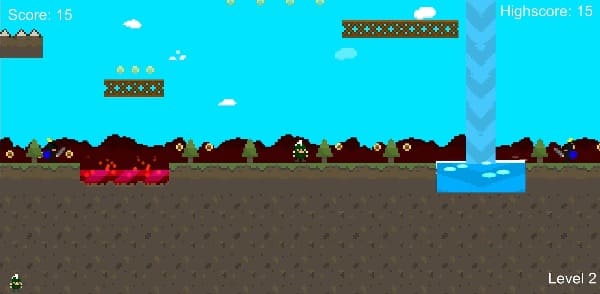
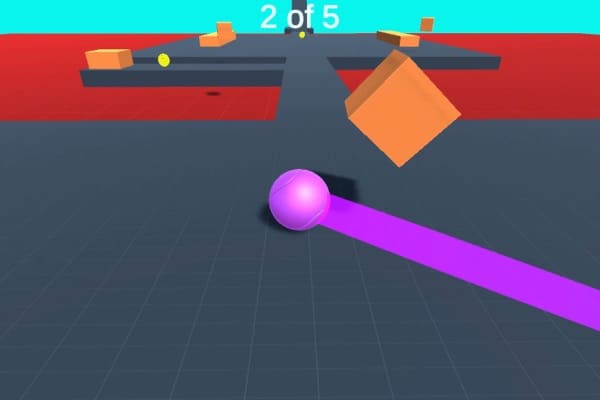
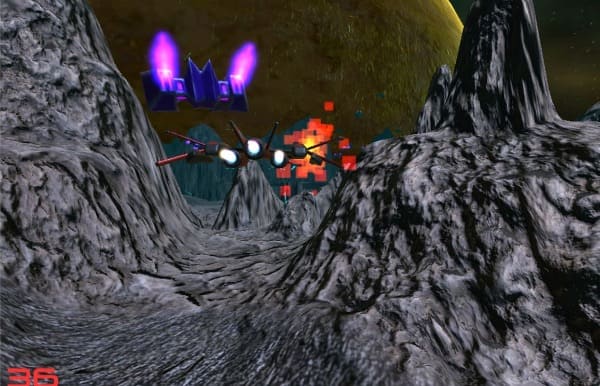
Roller Madness dives into a hyper-casual gaming experience where your objective is to skillfully guide the ball through each level, collecting all the coins while deftly avoiding the pitfalls of doom and overcoming an array of challenging enemies. Put your precision and reflexes to the test in this thrilling pursuit.
Boxshooter
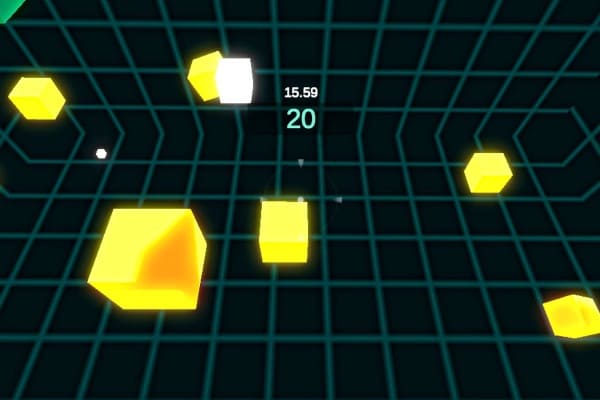
Step into the adrenaline-pumping world of this first-person shooter game. Your objective? Score a set number of points within a time limit by taking precise shots. But beware of the randomly spawning detrimental boxes – shooting one could cost you points and precious time, intensifying the challenge for an exhilarating gaming experience.
Sphereone
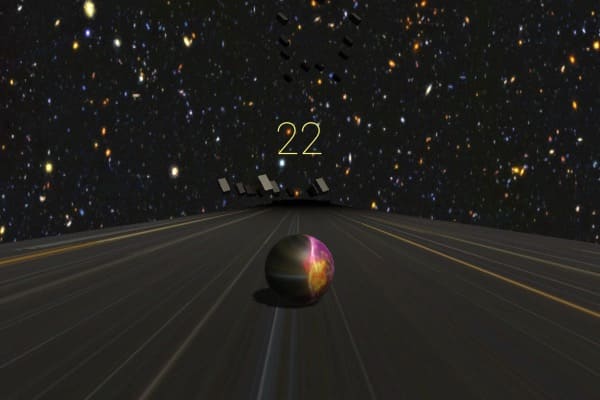
Experience the intensity of this fast-paced game where a ball hurtles through space at the speed of light along an imaginary path. Your mission is to skillfully navigate, dodging obstacles along the way and reaching the destination unscathed. Brace yourself for a thrilling journey where precision and speed are the keys to success.